
Secure Hard Drive Disposal: A Guide for UK Organisations
Secure hard drive disposal helps UK organisations protect sensitive data, meet GDPR obligations, and reduce e-waste through certified data erasure, responsible IT recycling, and reuse-first processes.
A cupboard full of retired laptops and desktop towers can look harmless. In practice, it is often where data risk sits quietly for months. Secure hard drive disposal is what turns redundant IT equipment from a liability into a closed, documented process — one that protects sensitive information, supports compliance, and keeps disposal moving.
For many organisations, the challenge is not deciding that old equipment has to go. It is knowing what “secure” really means, what evidence should be produced, and whether physical destruction is always the right outcome for every device. Those details matter, especially when staff records, financial files, customer data, emails, and saved credentials may still be sitting on a drive long after a machine has been unplugged.
What secure hard drive disposal means
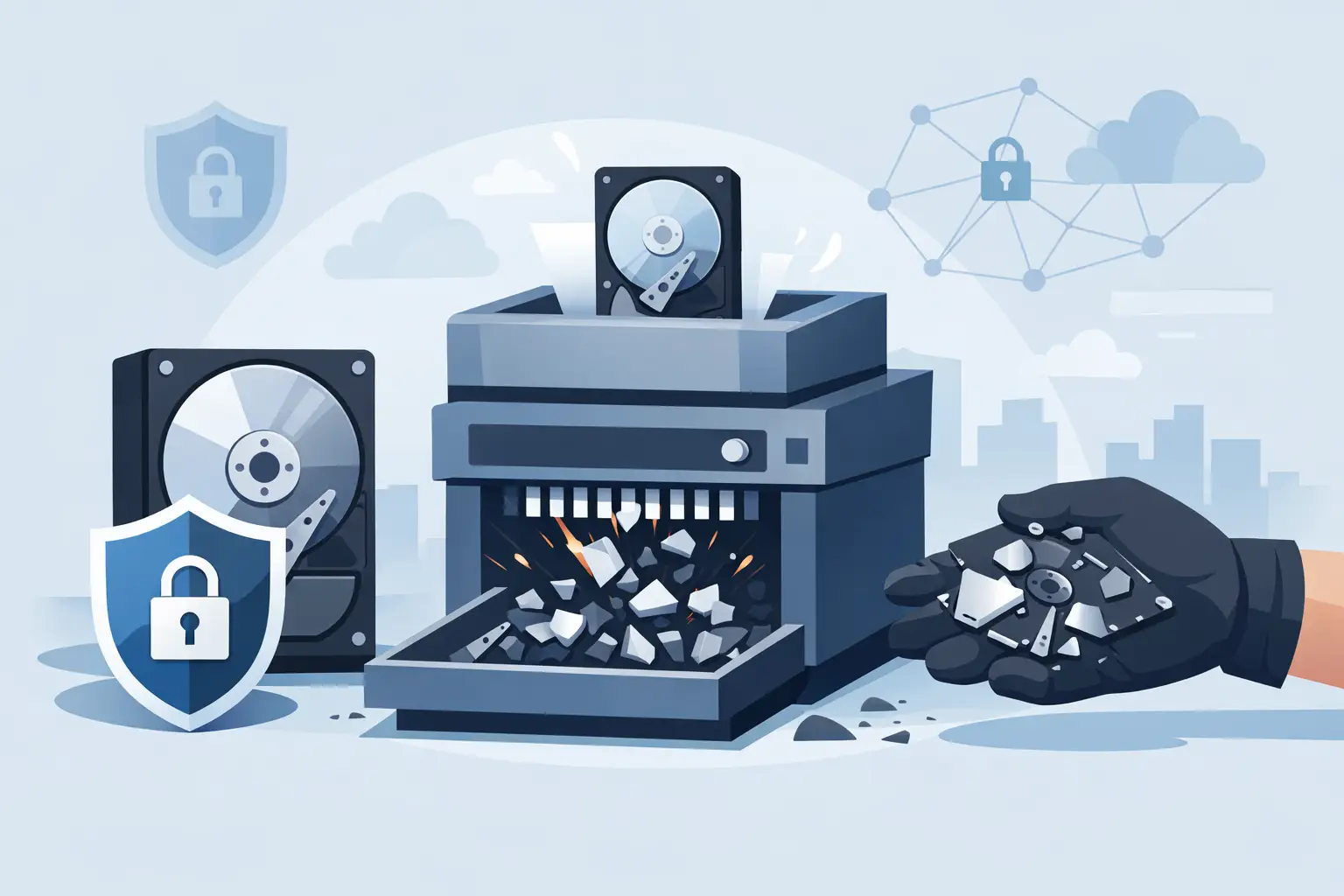
Secure hard drive disposal is the process of making data stored on a hard drive permanently inaccessible. That can be done through certified data erasure services, physical destruction, or a combination of both, depending on the device, the sensitivity of the data, and whether reuse is possible.
The distinction is important. A hard drive that has simply been deleted, reformatted, or placed in general recycling has not been securely cleared. Standard deletion only removes pointers to files. Reformatting can still leave recoverable data behind. Even damaged drives may contain retrievable information if they are handled by the wrong person.
A proper disposal process should be controlled, documented, and carried out by a provider that understands both data security and WEEE handling. For UK organisations, this is not just an IT housekeeping task. It sits at the point where GDPR duties, internal governance, and environmental obligations meet.
Why compliance matters
When equipment leaves your site, your responsibility does not automatically end. If personal data is still present and that device is lost, mishandled, or resold without proper processing, the consequences can be serious. The risk is not limited to large corporates. Schools, surgeries, charities, accountancy firms, estate agents, and small offices all hold data that should never be recoverable from redundant devices.
That is why secure hard drive disposal is often treated as part of a wider compliance chain. You need confidence that the devices collected are tracked, processed correctly, and backed by documentation such as a certificate of destruction or data destruction report. Without that paper trail, proving due diligence later can become difficult.
There is also a reputational point. A data breach involving old equipment tends to look avoidable, because it usually is. Most organisations do not need more storage space so much as they need a disposal process that is reliable and easy to action.
Why physical destruction is unnecessary, wasteful and harmful
Physical destruction is not always necessary because certified data erasure can make data permanently inaccessible without damaging the drive. If the storage media can be wiped to a recognised standard, the same security outcome can be achieved while keeping the device or drive available for reuse, refurbishment, or responsible recovery. In those cases, destruction adds no security benefit.
It is also wasteful. Destroying a drive that could have been erased throws away usable hardware and prevents a second life through redeployment or resale. That means organisations lose residual value and often pay more for disposal than they would for a reuse-first process. In practical terms, destroying working assets before assessing their condition is poor resource management.
The environmental impact is significant as well. Physical destruction increases e-waste, shortens product life, and reduces the amount of material that can be recovered cleanly. Every drive destroyed unnecessarily represents energy, metals, plastics, and manufacturing effort that have been discarded earlier than needed. A reuse-first approach is better aligned with the waste hierarchy and circular economy principles, because it keeps equipment in service for longer and reduces the need to manufacture replacements.
Disposal or erasure — which is right?
This is where a blanket approach can work against both cost efficiency and sustainability. Not every drive needs to be physically destroyed. In many cases, certified software erasure is the better route, particularly where equipment can be safely refurbished and reused afterwards.
If a laptop or PC still has residual value, secure erasure may allow the device to re-enter use without compromising data security. That supports the waste hierarchy by prioritising reuse before recycling. For many businesses, that is the better environmental outcome.
Physical destruction is usually reserved for drives that are faulty, highly sensitive, obsolete, or outside practical reuse. A credible provider should explain the trade-off rather than force every item through the same method.
How the process should work
A professional service should feel straightforward from the first conversation. You identify the redundant equipment, arrange collection, and confirm whether you need off-site processing, on-site services, or a mix of the two. From there, the important part is chain of custody.
Once assets are collected, they should be transported securely and handled by trained staff. Drives and devices need to remain identifiable within the process so that what leaves your premises can be matched to what is processed. This is especially relevant for businesses clearing offices, upgrading fleets, or decommissioning server rooms where volumes are larger and the room for confusion is greater.
After processing, you should receive documentation confirming what has happened. That paperwork is not a formality. It helps demonstrate that data-bearing equipment was dealt with properly and in line with policy.
For organisations managing multiple waste streams, it can also help to use a provider offering free IT recycling services alongside secure data handling. That reduces administrative effort and avoids splitting responsibility across several contractors.
Choosing a provider
The market uses a lot of reassuring language, but buyers should still be selective. A provider should be able to show that secure hard drive disposal is part of a controlled operational system, not an add-on service. Registration, documented procedures, and clear certification all matter.
In the UK, it is sensible to check for Environment Agency registration and ICO registration where data processing is involved. You should also expect a service that understands GDPR expectations in practice, not just in marketing copy. If collection, transport, destruction, and reporting are vague, that is usually a warning sign.
Service design matters too. A reliable end-of-life IT collection service can make the difference between a disposal project happening now or being postponed for another quarter. The easier the process is for your team, the less likely old devices are to sit in storage rooms, classrooms, or comms cupboards gathering dust and risk.
A good provider will also recognise that environmental responsibility is part of security, not separate from it. Where devices can be refurbished and reused after proper data erasure, that should be considered. Where they cannot, materials should be recycled responsibly through a compliant IT recycling partner.
Common mistakes that expose data
The most common error is assuming the IT team has already wiped everything and that no further action is needed. Unless erasure has been carried out to an appropriate standard and recorded, that assumption can be risky.
Another mistake is storing retired equipment for too long. Delays create blind spots. Staff change, asset lists become less accurate, and devices are more likely to go missing or be moved without authorisation.
Some organisations also separate disposal from compliance. Facilities may arrange clearance while IT handles data and procurement handles replacement equipment, with no single owner of the end-to-end process. That is where gaps appear.
Why environmental outcomes matter
Security is usually the first concern, rightly so. But disposal decisions also shape your environmental impact. Sending everything straight to destruction without assessing reuse potential may feel simpler, yet it can be wasteful. Equally, prioritising reuse without proper data controls is not acceptable.
The balance is to protect data first while still following the waste hierarchy wherever possible. Refurbishment-first thinking can reduce unnecessary recycling, extend the life of working equipment, and support circular economy goals.
This is one reason many organisations use Tech Recycle for secure hard drive disposal, certified data destruction, WEEE-compliant IT recycling, and nationwide collection services.
When to act
If you have a storeroom of unloved desktops, a cupboard of ex-staff laptops, decommissioned servers after a migration, or mixed electrical waste from an office move, you already have enough reason to review your process. Waiting rarely improves control. It usually just increases the number of unknowns.
The practical goal is simple: remove redundant equipment promptly, ensure data is irretrievable, and keep a clear record of what happened. When that process is easy to arrange and properly documented, disposal stops being a recurring risk and becomes routine good governance.
Old drives do not become safe just because they are switched off. They become safe when they are handled through a process that is secure, compliant, and responsible from collection to final treatment.