
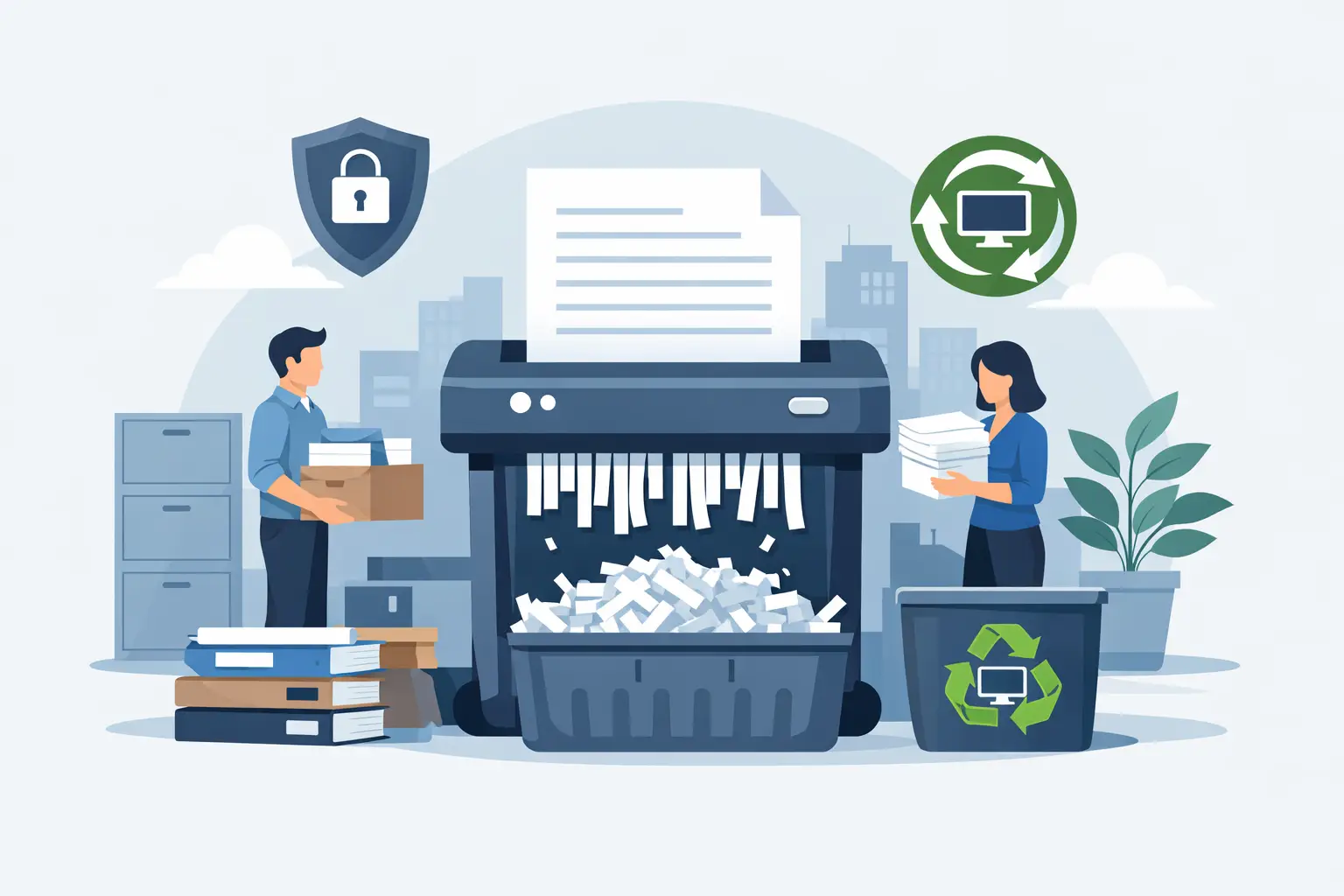
A locked cupboard full of old payroll files, customer records and printed contracts can look harmless until someone asks how those documents will be disposed of. At that point, a paper shredding service for businesses stops being a nice-to-have and becomes part of basic risk control.
For many organisations, paper is still part of daily operations even when most systems are digital. HR files, finance paperwork, delivery notes, medical forms, signed agreements and internal reports all have a habit of building up in cabinets and storerooms. Leaving them in place creates clutter, but disposing of them carelessly creates a much bigger problem. If confidential paperwork is lost, seen by the wrong person or put into general waste, the reputational and compliance consequences can be serious.
Why businesses still need secure paper disposal
It is easy to assume that data security begins and ends with laptops, servers and mobile phones. In practice, printed information often carries the same level of sensitivity. Names, addresses, bank details, salary information, account numbers, contract terms and health data can all appear on paper, and once printed, those records need to be managed with the same care as digital files.
That is why a professional paper shredding service for businesses matters. It gives organisations a controlled process for disposing of confidential documents, rather than relying on office shredders, ad hoc clear-outs or staff carrying sacks of paperwork to an unknown destination.
There is also a practical point here. Most in-house shredders are not designed for volume. They jam, overheat, slow staff down and often leave the business with bags of shredded paper to manage afterwards. For a small amount of occasional paperwork, that may be acceptable. For regular document disposal or archive clearances, it rarely is.
What a paper shredding service for businesses should include
Not every service offers the same level of control, and the right option depends on the type of documents you hold, how often you need collections and what level of assurance your organisation expects.
At a minimum, the service should provide secure containment, a clear chain of custody and confirmation that documents have been destroyed properly. If you are handling personal data or commercially sensitive records, that should not be treated as optional. You need to know who collected the material, how it was transported, how it was destroyed and what evidence you receive afterwards.
For many organisations, scheduled collections work well because they remove the temptation to let confidential paperwork pile up. For others, a one-off collection is more suitable, especially during an office move, records clear-out or retention review. Neither approach is inherently better. It depends on your document volumes, internal processes and storage space.
On-site shredding can appeal to organisations that want material destroyed at their premises. Off-site shredding can be equally appropriate when the chain of custody is tightly managed and the provider operates securely. The real question is not which option sounds better in theory, but which one fits your operational needs and compliance expectations.
Compliance is more than a certificate
A lot of businesses start looking for shredding services because of GDPR, internal audit requirements or sector-specific obligations. That makes sense, but compliance should be understood properly. Secure shredding is not just about receiving a certificate after the event. It is about using a process that reduces the chance of exposure in the first place.
If your organisation stores personal data in printed form, disposal is part of your overall data handling responsibility. The same applies to confidential commercial records. A provider should be able to explain its handling procedures clearly, not hide behind vague claims about being secure.
Documentation matters, but so do registrations, operational controls and experience dealing with sensitive waste streams. In the UK, businesses often want reassurance that their service provider understands both data protection and waste obligations. That is especially relevant for organisations that are already reviewing their approach to IT disposal, archived files and wider office clearances.
The hidden cost of doing it yourself
On paper, keeping shredding in-house can look cheaper. In reality, that often changes once time, labour and disruption are taken into account.
Someone has to remove staples and folders, feed the shredder, deal with jams, empty the machine and arrange disposal of the shredded output. If the machine breaks down, the backlog remains. If staff are shredding in between other tasks, productivity drops. If documents are left waiting beside desks or printers because the process is inconvenient, risk increases.
There is also the issue of consistency. Internal processes tend to work well until workloads rise, key staff are absent or storage space becomes tight. A managed shredding service is valuable because it creates a repeatable, accountable routine rather than relying on good intentions.
Security and sustainability should work together
Secure disposal does not need to conflict with environmental responsibility. In fact, businesses increasingly expect both.
When confidential paper is shredded through a responsible provider, the material can enter the recycling stream while still being handled securely. That matters for organisations trying to improve waste management practices without compromising data protection. It also supports a more sensible approach to office clearances, where paper records, old IT equipment and redundant electrical items often need to be removed at the same time.
This joined-up view is often more efficient than dealing with each waste stream separately. A business that is clearing out old files may also be disposing of obsolete computers, monitors, printers and cables. Working with a provider that understands secure destruction and responsible recycling can reduce admin and make the whole process easier to manage.
That is one reason organisations across the UK look for specialist partners rather than generic waste contractors. Sensitive paper and data-bearing equipment need controlled handling, and wherever possible, non-paper items should be assessed for reuse and refurbishment before recycling. Destroying everything by default is rarely the best environmental outcome.
How to choose the right provider
The strongest providers tend to be the clearest. They explain how collections work, what happens to documents after collection, what records you will receive and how they support your compliance requirements.
It is worth asking whether the service fits your actual business rather than a standard package. A school clearing old pupil files, a solicitor managing regular confidential waste, and an office relocating after a lease expiry may all need different arrangements. Volume, frequency, access restrictions and security expectations can vary quite a bit.
You should also look at the wider service model. If a provider can support secure paper shredding alongside IT and WEEE collections, that can simplify procurement and reduce operational friction. For facilities teams and office managers, that sort of practical convenience matters.
A capable provider should make the process straightforward – secure collection, controlled handling, clear paperwork and no unnecessary complications. If the service feels vague at the enquiry stage, that is usually a warning sign.
When businesses usually need shredding most
Some organisations need regular confidential waste collections because paper records are part of daily operations. Others only realise they need support when a specific event forces the issue.
Office moves are a common trigger. So are mergers, storage room clear-outs, digitisation projects, policy changes on document retention and end-of-year records reviews. In each case, the challenge is the same: a large quantity of paperwork needs to leave the premises securely, without distracting staff from their main job.
There is no perfect volume threshold that tells you when to stop using an office shredder and bring in a specialist. A better test is whether your current process is genuinely secure, manageable and consistent. If paperwork is accumulating, if staff are spending hours feeding small machines, or if you are unsure what evidence you could provide during an audit, it is probably time to upgrade the process.
A simpler way to manage confidential paper
For most organisations, the best shredding arrangements are the ones that remove uncertainty. Documents are stored securely, collected reliably, destroyed under controlled conditions and backed up with the right paperwork. Staff are not left improvising, and managers are not left wondering whether confidential records are still sitting in a cupboard somewhere.
That is the standard businesses should expect. A service should reduce risk, save time and support responsible disposal without adding extra admin. If you are already reviewing old files, redundant devices or general office waste, it makes sense to address paper security at the same time. Tech Recycle supports businesses that need secure, compliant and practical collection services, with an approach built around protection, simplicity and responsible handling.
The useful question is not whether your business has paper worth shredding. It is whether your current process would stand up to scrutiny if someone checked it tomorrow.