
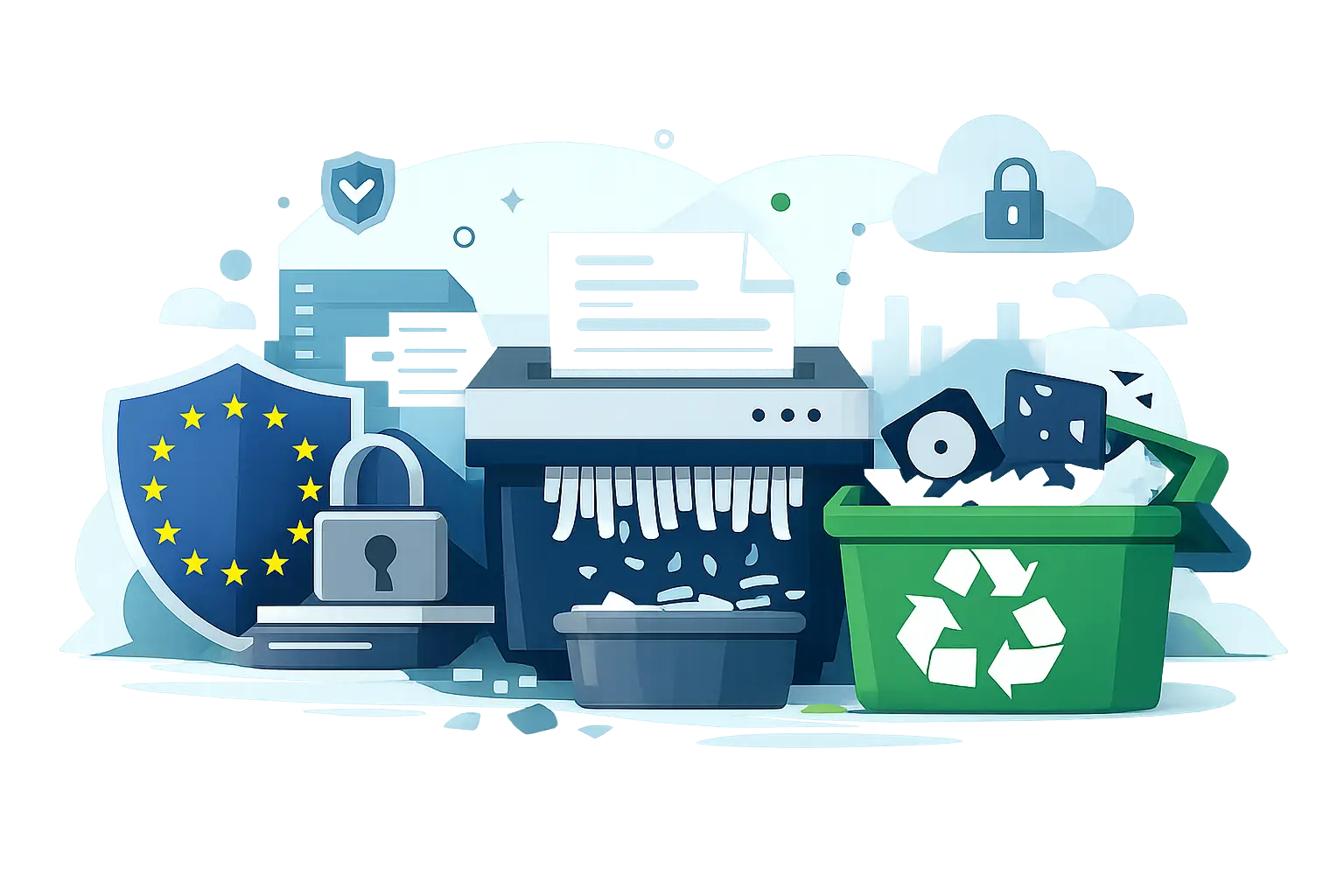
A redundant laptop in a locked cupboard can still be a data breach waiting to happen. If old hard drives, mobile phones, servers, paper files or backup media are holding personal data, your responsibility does not end when the equipment stops being useful. GDPR compliant data destruction is about making sure that information is erased or destroyed in a way that is secure, documented and appropriate to the risk.
For many organisations, the challenge is not understanding that data needs protection. It is dealing with the practical reality of outdated IT piling up in storerooms, offices and comms rooms while teams juggle compliance, space, budgets and environmental targets. That is where a clear disposal process matters.
What GDPR compliant data destruction actually means
The GDPR does not prescribe one single destruction method for every item. What it requires is that personal data is processed securely throughout its lifecycle, including when devices and records reach end of life. In practice, GDPR compliant data destruction means using a method that makes the personal data irretrievable, while keeping a clear audit trail to show what happened, when it happened and who handled it.
That can include certified wiping, degaussing, shredding, crushing or physical destruction, depending on the media involved and whether the asset is suitable for reuse. The right option depends on the device, the sensitivity of the information, the intended outcome and the organisation’s own policies.
This point matters because destruction should not be treated as a blunt instrument. If a laptop, desktop or server can be securely sanitised to a recognised standard and then refurbished or redeployed, that may support both compliance and environmental goals. Destroying equipment unnecessarily can create avoidable waste. The focus should be on destroying the data effectively, not automatically destroying every asset.
Why storage is not a compliance strategy
A common problem in offices, schools and public sector settings is postponed disposal. Old IT is boxed up “for later” because no one wants to risk data exposure, but no one has time to arrange a secure collection either. The result is a growing stockpile of obsolete equipment containing personal data, often with incomplete asset records and unclear ownership.
That creates several risks at once. Devices can be lost, stolen or accessed internally without authorisation. Data retention periods may be exceeded. Insurance and governance questions become harder to answer. And when the time finally comes to clear the space, the organisation may be dealing with years of mixed equipment and no reliable chain of custody.
A better approach is to move redundant assets into a controlled disposal workflow as soon as they are decommissioned. The longer items sit around, the less certain the records usually become.
Choosing the right destruction method
Not every media type should be treated the same way. A paper file, a solid-state drive and a mobile phone all need different handling. What matters is whether the chosen method genuinely prevents recovery and whether it is backed by proper controls.
Data wiping and sanitisation
Where equipment is intended for reuse, certified erasure is often the best route. This is especially relevant for laptops, desktops and other devices that may still hold value. Professional data wiping can remove data from storage media to a recognised standard while preserving the asset for refurbishment or redeployment.
This option supports the waste hierarchy because it prioritises reuse over destruction. It also gives organisations a practical way to align data protection with sustainability targets. The trade-off is that wiping has to be carried out properly, with verified results and suitable reporting. It is not enough to rely on a quick reset or assume that deleting files has solved the problem.
Physical destruction
Some media should be physically destroyed because reuse is not viable, the device is damaged, the data is highly sensitive or policy requires total destruction. Hard drives, tapes and certain failed storage devices often fall into this category. Shredding, crushing or other approved destruction methods can make recovery impossible when carried out by a competent provider.
Physical destruction is often the clearest choice when certainty is the priority. The trade-off is environmental. Once storage media or whole devices are destroyed, reuse is off the table. That is why many organisations now separate the destruction of data-bearing components from the recycling of the wider equipment.
Paper and document shredding
GDPR responsibilities do not stop with electronic records. Archived paperwork, HR files, invoices, contracts and printed reports may all contain personal data. Secure shredding is still an important part of compliant disposal, particularly for organisations with mixed paper and IT waste streams.
The role of documentation and audit trails
If you cannot show what happened to the data, proving compliance becomes difficult. Secure destruction should always be supported by paperwork that records the chain of custody and the final treatment of the assets or materials involved.
That usually includes collection records, asset schedules where appropriate, and certificates of data destruction or recycling. For regulated sectors and larger organisations, the detail really matters. Auditors, compliance leads and internal stakeholders may all need evidence that redundant equipment was handled securely and in line with policy.
Good documentation is not just administrative tidiness. It protects the organisation if questions are raised later about a missing device, an information governance issue or a suspected breach. It also helps create a repeatable process rather than a one-off clear-out.
What to look for in a disposal partner
Trusting a third party with end-of-life IT is ultimately a question of risk transfer. You are asking another organisation to handle equipment that may contain personal, confidential or commercially sensitive information. That means convenience alone is not enough.
Look for a provider with clear procedures for collection, transport, storage and processing. Registration with the Information Commissioner’s Office and the relevant environmental authorities matters because it shows the business is operating within the proper framework. So does the ability to provide certificates and explain exactly how data-bearing items are treated.
It is also worth asking a simple question that many buyers overlook: does the provider destroy everything by default, or do they take a refurbishment-first approach where secure erasure makes reuse possible? For many organisations, that distinction is increasingly important. It supports ESG commitments, reduces waste and makes better use of equipment that still has life in it, without compromising data security.
GDPR compliant data destruction and sustainability can work together
There is a persistent myth that the safest option is always the most destructive one. In reality, the safest option is the one that matches the risk and is carried out properly. That can mean physical destruction for failed drives or highly sensitive media. It can also mean certified erasure for devices suitable for remarketing or redeployment.
This is where compliance and environmental responsibility meet. If personal data is securely removed and the process is documented, reuse can be the better outcome. It keeps equipment in circulation for longer, reduces unnecessary waste and supports a more responsible approach to IT disposal.
For organisations under pressure to improve sustainability reporting, that balance is becoming more relevant. Data protection teams and facilities or IT teams do not need to be at odds. A well-managed disposal process should satisfy both.
Building a practical internal process
The most reliable organisations tend to keep things simple. They identify redundant assets promptly, separate data-bearing items from general electrical waste, log what is leaving site and use a specialist provider that can collect, process and certify the outcome. Staff should know that old devices are never to be left in cupboards, skipped with general waste or passed on informally.
It also helps to review internal retention and disposal policies. If your policy says data-bearing assets must be handled a certain way, your operational process should match it. Gaps usually appear when policy sits with compliance while disposal sits with estates, admin or IT support.
For UK organisations dealing with regular refresh cycles, office moves or legacy clear-outs, a collection service that combines secure handling with documented destruction can remove a lot of friction. Tech Recycle, for example, focuses on secure collections, certified data destruction and reuse-led processing so organisations can clear redundant equipment without losing sight of compliance or environmental duty.
The best time to think about data destruction is not when the storeroom is already full. It is at the point equipment becomes redundant. When disposal is planned properly, GDPR compliance becomes far easier to demonstrate, and you avoid turning old devices into long-term risk sitting quietly behind a locked door.