
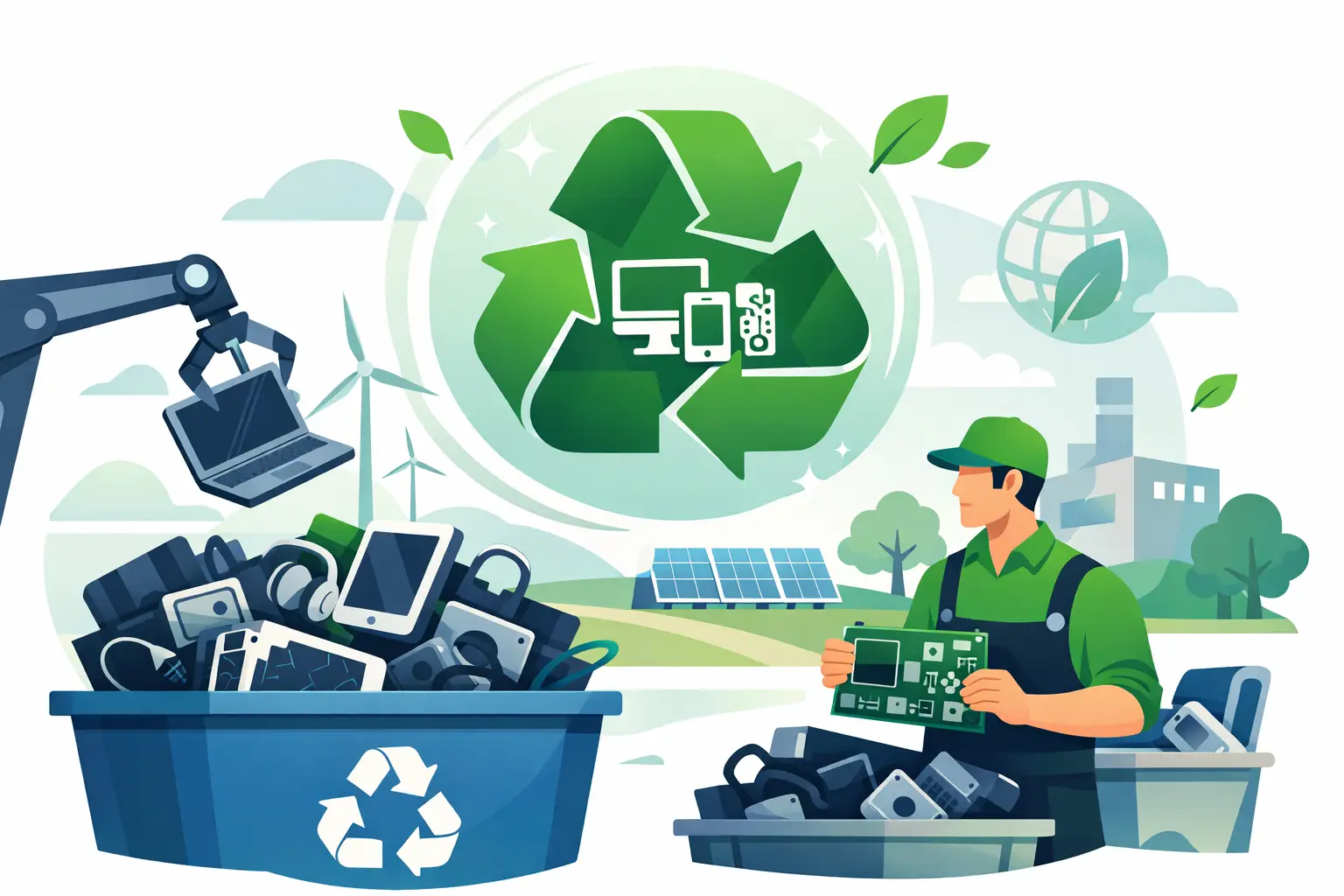
A locked store cupboard full of old laptops, tangled leads, broken monitors and retired printers is more than an inconvenience. For many organisations, it is a compliance issue, a data security risk and a missed opportunity to recover value from equipment that may still have life left in it. That is why understanding what is WEEE recycling matters – especially if your business needs a practical, lawful way to clear electrical waste without creating new problems.
What is WEEE recycling?
WEEE stands for Waste Electrical and Electronic Equipment. In simple terms, WEEE recycling is the safe collection, treatment, reuse and recycling of unwanted electrical items. That includes everything from computers, servers and mobile phones to kettles, cables, TVs, printers and small office appliances.
The aim is not just to get rid of unwanted kit. Proper WEEE recycling separates equipment that can be refurbished and reused from equipment that genuinely needs to be broken down for materials recovery. Metals, plastics and other components can then be processed responsibly, while hazardous parts are handled in line with environmental regulations.
For businesses, schools and public sector organisations, this is about far more than housekeeping. Electrical waste often contains both sensitive data and materials that must not end up in general waste. A compliant process protects your organisation, your people and the environment at the same time.
Why WEEE recycling exists
Electrical equipment is complex. A single desktop PC can contain steel, aluminium, copper, circuit boards, plastics and a range of smaller components that need different treatment routes. Some items also contain substances that can be harmful if they are dumped, crushed incorrectly or sent to landfill.
That is the core reason WEEE recycling exists. It reduces environmental harm, keeps valuable materials in circulation and supports a more responsible approach to resource use. It also sits alongside the waste hierarchy, where reuse comes before recycling, and recycling comes before disposal.
That order matters. If a working laptop can be refurbished and redeployed, destroying it straight away is usually the poorer outcome. It is more wasteful, often unnecessary and does nothing to support the circular economy. Responsible WEEE handling starts by asking what can be reused safely before asking what must be dismantled.
What counts as WEEE?
If an item needs a plug, battery or charger to work, it will usually fall within the scope of WEEE. In everyday business settings, common examples include desktop computers, laptops, monitors, docking stations, networking equipment, mobile phones, tablets, printers, photocopiers, servers, scanners, keyboards, cables and telecoms equipment.
It is not limited to IT. Kitchen appliances in staff areas, fans, heaters, vacuums, shredders and hand dryers may also count. That is why WEEE builds up so easily across offices, schools, warehouses and multi-site organisations. Electrical waste rarely arrives in one neat category.
There can be grey areas, particularly with mixed assets, specialist equipment or partially dismantled items. If you are unsure, the sensible approach is to check before arranging disposal. Getting that classification right helps avoid delays and ensures the material is sent down the correct treatment route.
How the WEEE recycling process works
The process starts with collection and secure transport. For many organisations, this is where the real pressure sits. Equipment is often spread across departments, boxed inconsistently or left in comms rooms and cupboards because no one wants to risk moving it without proper oversight.
Once collected, the equipment is booked in and assessed. At this stage, items are usually sorted into broad groups such as reusable IT, non-working electricals, display equipment, cables or peripherals. Assets that may still have useful life left are tested for refurbishment or reuse where appropriate.
If data-bearing devices are involved, secure data destruction comes before any reuse or recycling decision is finalised. That point is critical. A laptop is not just scrap because it is old, and a hard drive is not safe just because the device no longer powers on. Businesses need a documented, GDPR-aware process that proves data has been handled correctly.
After that, equipment that cannot be reused is dismantled and separated into material streams. Metals can be recovered, plastics processed, and hazardous fractions isolated for specialist treatment. The exact route depends on the item, its condition and the facilities used by the recycler.
Why compliant WEEE recycling matters for businesses
The biggest misconception is that WEEE recycling is simply an environmental task. In reality, it is also a legal and operational one. If your organisation disposes of electrical waste carelessly, the risks are not abstract. They include data breaches, poor audit trails, improper handling of hazardous materials and questions over where assets ended up.
A compliant service reduces those risks by giving you a clear chain of custody, appropriate documentation and reassurance that the equipment has been processed lawfully. For organisations handling customer information, employee records or sensitive internal data, that confidence is not optional.
There is also a practical business benefit. Redundant equipment takes up space, attracts dust, creates confusion during office moves and becomes one more unresolved task for facilities or IT teams. A structured collection and disposal process removes that burden quickly and cleanly.
What to look for in a WEEE recycling provider
Not all providers offer the same level of control. If you are choosing a partner, look beyond simple collection. You need a recycler that can demonstrate compliant handling, secure data destruction where required and clear documentation for your records.
A reuse-first approach is also worth paying attention to. It shows that the provider understands the waste hierarchy and is not treating every collection as automatic destruction. That matters if you want to reduce waste, support better environmental outcomes and avoid scrapping usable equipment unnecessarily.
For many UK organisations, convenience matters too. Nationwide collection, practical scheduling and straightforward service delivery make a real difference when your internal teams are already stretched. A process only works if people can actually use it.
Tech Recycle follows that approach by combining secure collection, certified data destruction and refurbishment-first processing, with free collection available for qualifying IT and WEEE equipment across the UK.
What is WEEE recycling in practice for IT assets?
When the waste stream is mostly IT equipment, WEEE recycling becomes more specialised. A box of obsolete keyboards is relatively simple. A stack of encrypted laptops, old servers and office mobiles is not. Those assets may contain hard drives, SSDs, SIM-linked devices or legacy storage media that require controlled handling.
In practice, the right route depends on the asset. Some equipment can be securely wiped, tested and reused. Some should be physically destroyed because of policy, condition or data sensitivity. Others may have no reuse value but still contain recoverable materials. There is no single route for every item.
That is why businesses benefit from a provider that can handle collection, audit trail, data destruction and downstream recycling as one joined-up service. It reduces handoffs, limits risk and makes reporting easier.
Common mistakes to avoid
One of the most common mistakes is storing old electricals indefinitely because no one is sure who owns the decision. Another is assuming that deleting files is enough before disposal. It usually is not.
Some organisations also mix general waste, confidential paper and electrical waste in the same clearance project. That can create avoidable compliance issues and confusion on collection day. Others focus only on cost and overlook documentation, registrations and security controls.
The better approach is simple. Identify what you have, separate data-bearing devices from low-risk electricals, and use a specialist that can provide a compliant route for both reuse and recycling. That saves time later and prevents rushed decisions.
Why this matters beyond disposal
Electrical waste should not be treated as an afterthought once equipment reaches the end of its working life in your office. Managed properly, WEEE recycling supports better data governance, cleaner sites, stronger environmental performance and more responsible use of technology assets.
For some organisations, the immediate priority is clearing space. For others, it is meeting internal compliance standards or avoiding GDPR risks. Often, it is all three. The right WEEE process can address those needs together, provided it is built around secure handling and realistic reuse opportunities.
If you are looking at a pile of old equipment and wondering whether it is still useful, recyclable or potentially risky, that is the right moment to act. The safest and most sustainable option is usually not to leave it where it is, but to move it into a controlled process that protects both your organisation and the wider environment.
A good WEEE recycling service does more than take things away – it gives you certainty about what happens next.