
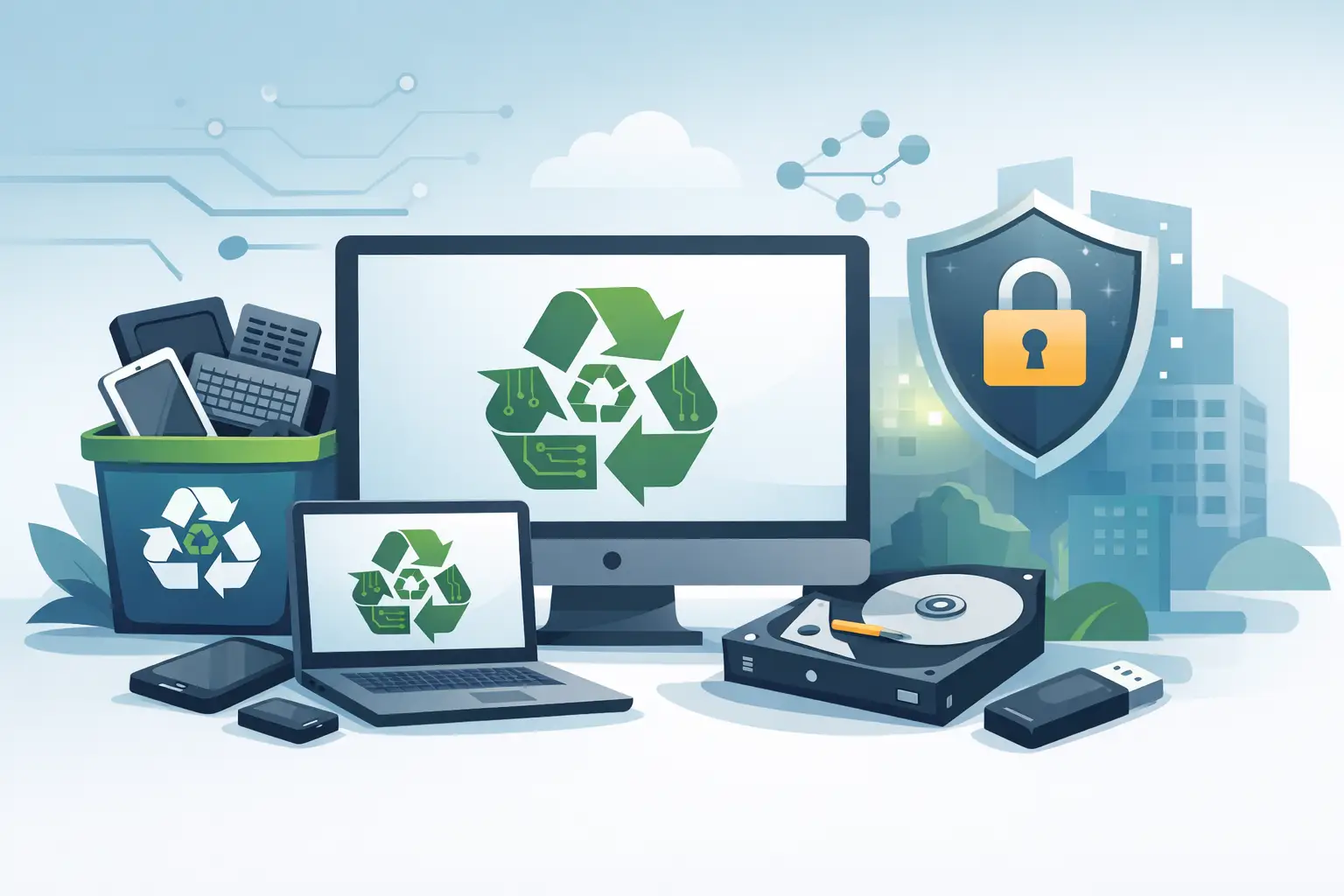
A locked storeroom full of old laptops, monitors and tangled cables is rarely just a space problem. For most organisations, it is a data risk, a compliance issue and a missed opportunity to handle waste more responsibly. Good IT recycling services do more than remove unwanted equipment – they protect sensitive information, provide clear documentation and make sure reuse is considered before anything is broken down for materials.
That matters whether you are clearing a school ICT suite, replacing office desktops, decommissioning devices after a refresh, or finally dealing with the pile of electricals that has been growing in the corner for months. The right provider should make the process straightforward while giving you confidence that your equipment is handled properly from collection to final outcome.
What IT recycling services should actually cover
At a basic level, IT recycling services are about collecting and processing redundant technology and electrical equipment. In practice, a proper service should cover far more than transport and disposal. You need secure handling, traceability, lawful treatment under WEEE rules, and a process that reflects the real value and risk attached to IT assets.
That usually includes the collection of computers, laptops, monitors, servers, mobile phones, networking equipment, printers, cables and other workplace electricals. For many organisations, the service also needs to include certified data destruction for storage-bearing devices and clear paperwork that supports internal governance, insurance requirements and data protection obligations.
The strongest providers also work in line with the waste hierarchy. That means looking at reuse and refurbishment first, then recycling where reuse is not practical. This is not just an environmental preference. It is often the most sensible route for equipment that still has serviceable life left in it, even if it no longer suits your business.
Why secure IT recycling services matter
Old technology has a habit of looking harmless once it is unplugged. It is not. A redundant desktop can still contain personal data, financial records, staff information, emails and saved credentials. A printer may retain scanned documents. Mobile devices often hold access to multiple cloud systems. If equipment leaves your site without proper controls, the risk does not disappear with it.
This is where secure IT recycling services become essential rather than optional. Data-bearing devices should be clearly identified, tracked and processed using a defined chain of custody. Depending on your needs, that may involve secure erasure, physical destruction, or a mix of both. The right method depends on the device type, the sensitivity of the data and whether reuse is possible afterwards.
There is a trade-off here. Physical destruction can offer reassurance, especially for highly sensitive material, but it also ends any chance of reuse. Where secure erasure is suitable and properly validated, it can support both data protection and environmental goals. A good provider will explain that difference clearly instead of pushing a one-size-fits-all answer.
Compliance is not a box-ticking exercise
When organisations look for a recycling partner, price and convenience often lead the conversation. Both matter, but they should not come ahead of compliance. Waste electrical equipment is regulated for a reason, and the consequences of poor handling can extend beyond environmental harm to reputational damage and data protection failures.
A compliant provider should be able to demonstrate the right registrations, documented processes and auditable handling of materials. If data destruction is part of the service, you should expect certification and records that support your GDPR responsibilities. If waste is being moved and processed, there should be a clear legal basis for that activity and evidence that the downstream handling is properly controlled.
This is especially important for schools, healthcare settings, public sector bodies and businesses with regulated or confidential information. In those environments, vague promises are not enough. You need a service that stands up to scrutiny.
Reuse first, recycle second
Not every outdated device is waste. That distinction matters. A five-year-old laptop may be unsuitable for a design team running demanding software, but still perfectly viable for lighter administrative use once it has been assessed, data-cleansed and refurbished. Treating all redundant equipment as scrap is expensive in environmental terms and often unnecessary.
A refurbishment-first approach reduces waste, supports the circular economy and makes better use of the resources already embedded in the equipment. It also aligns with what many organisations now expect from their suppliers – practical sustainability, not just broad claims.
That does not mean everything can or should be reused. Some equipment is beyond economical repair. Some devices are too damaged, too old or too specialised. Some data security policies will rightly rule out redeployment in certain cases. The point is that reuse should be considered properly before recycling begins. If a provider destroys everything by default, that should raise questions.
What to look for in an IT recycling partner
A dependable service should feel organised from the first conversation. Collection arrangements should be clear, acceptable items should be confirmed in advance, and there should be no confusion about what happens once the load leaves your site. For busy offices and facilities teams, that clarity is half the value.
Look for a provider that can handle collections efficiently, offer secure data destruction options and issue the right documentation without chasing. National coverage can also make a real difference if your organisation operates across multiple sites or needs a consistent process in different regions.
It is also worth paying attention to how the provider talks about outcomes. If the focus is entirely on disposal, that may suggest a narrow process. If they can explain how equipment is assessed for reuse, how data is managed, and how recycling is carried out where necessary, you are more likely to be dealing with a service built around responsibility rather than volume alone.
For many customers, cost is naturally part of the decision. Free collection on qualifying loads can be a major practical advantage, but it should still come with the same standards around security, compliance and reporting. Low hassle is helpful. Low visibility is not.
How the process should work in practice
The best IT recycling services remove friction rather than creating more admin. In most cases, the process should begin with a straightforward assessment of the equipment you need removed. That helps confirm whether collection is appropriate, what vehicles or handling may be needed, and whether any items require special treatment.
Collection itself should be planned to suit your site. A school may need a timed visit outside busy drop-off periods. A city office may need loading restrictions considered. A warehouse or public sector estate may require on-site coordination with facilities or security staff. These details matter because a service is only convenient if it works in the real world.
Once collected, equipment should be logged, moved through secure processing and assessed for reuse, recycling or destruction. Data-bearing devices should go through the agreed destruction route, with certificates issued where required. Non-data items should be processed through approved channels, with as much material recovered as possible where reuse is not viable.
For customers, the ideal result is simple. The equipment is gone, the paperwork is in order, the risk has been managed and you can show your organisation handled the matter responsibly.
Who benefits most from IT recycling services
Almost any organisation accumulates redundant technology, but the need becomes most urgent where equipment turnover is high or storage space is limited. Offices replacing desktop estates, schools updating classroom devices, healthcare settings disposing of legacy equipment, and growing businesses trying to keep on top of compliance all benefit from a reliable collection and processing service.
Individuals can benefit too, particularly where there are concerns about old family computers, mobile devices or home office equipment. The scale may be smaller, but the data risks are still real.
For larger organisations, there is an added operational benefit. Outsourcing the removal, destruction and documentation process frees internal teams to focus on active systems rather than managing obsolete assets. That is often more efficient than asking IT or facilities staff to improvise a disposal route themselves.
A service-led provider such as Tech Recycle can be particularly useful where customers need secure collection, certified destruction and a practical route for reuse without turning the job into a project of its own.
Choosing IT recycling services should never come down to who can clear the pile fastest. The better question is whether the provider can protect your data, meet your legal duties and handle equipment in a way that avoids needless waste. When those three things are in place, clearing out old technology stops being a risk hanging over your team and becomes one job properly dealt with.